
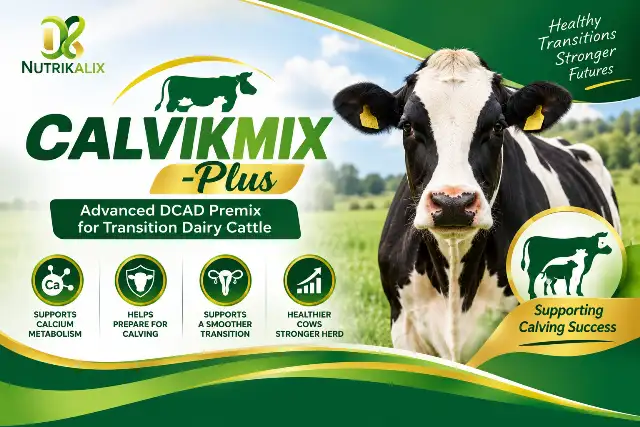
CALVIKMIX-Plus is an advanced DCAD premix for transition dairy cows. This DCAD Supplement for cows (Dietary Cation-Anion Difference) contains carefully balanced anionic salts and essential minerals. This transition premix or transition supplement helps to maintain calcium metabolism before calving.
The transition period is one of the most critical stages in the life of a dairy cow. The weeks before and after calving place tremendous metabolic and nutritional stress on dairy animals. During this phase, cows are highly vulnerable to milk fever, retained placenta, ketosis, reduced feed intake, poor fertility, and other metabolic disorders.
Proper nutritional management during the transition period is essential to maintain animal health, smooth calving, and successful lactation. CALVIKMIX-Plus is specially developed to support transition dairy cattle through advanced DCAD nutrition.
This specialized transition premix supports:
- Prevention of milk fever
- Better calcium mobilization
- Smooth calving
- Improved reproductive health
- Reduced metabolic disorders
- Better feed intake
- Faster post-calving recovery
- Improved transition management
Its scientifically designed formulation helps dairy cows successfully adapt to the stress of calving and early lactation.
Why Transition Supplement is Important in Dairy Cattle
The transition period usually starts three weeks before calving and continues until three weeks after calving. During this time, dairy cows face major physiological and metabolic changes. Without proper nutritional support, transition cows may suffer from:
- Milk fever
- Hypocalcemia
- Retained placenta
- Ketosis
- Fatty liver syndrome
- Reduced appetite
- Displaced abomasum
- Poor fertility
- Weak immunity
Understanding of DCAD in Dairy Nutrition
DCAD stands for Dietary Cation-Anion Difference. It refers to the balance between positively charged minerals (cations) and negatively charged minerals (anions) in the diet.
The major cations include:
- Sodium (Na⁺)
- Potassium (K⁺)
The major anions include:
- Chloride (Cl⁻)
- Sulfur (S²⁻)
In dairy nutrition, DCAD is commonly expressed using the formula:
DCAD = (Sodium + Potassium) – (Chloride + Sulfur)
The balance of these minerals directly influences the cow’s acid-base status, mineral metabolism, and calcium regulation.
During late pregnancy, dairy cows experience a dramatic increase in calcium demand because large amounts of calcium are suddenly needed for colostrum formation and milk production immediately after calving.
If the cow’s body is not metabolically prepared to meet this demand, blood calcium levels can fall rapidly, resulting in hypocalcemia (milk fever). Even subclinical hypocalcemia, where no obvious signs are visible, can negatively affect productivity and health.
Feeding a negative DCAD diet during the last 2–3 weeks before calving creates a mild, controlled metabolic acidosis. This slightly acidic state improves the cow’s hormonal response for calcium regulation, particularly the action of parathyroid hormone (PTH), which is responsible for maintaining blood calcium levels.
As a result, the cow becomes more efficient at:
- Mobilizing calcium from bones
- Absorbing calcium from the digestive tract
- Maintaining stable blood calcium levels at calving
This metabolic preparation significantly reduces calcium-related complications.
Feeding a negative DCAD diet before calving helps:
- Improve calcium mobilization
- Reduce milk fever risk
- Support muscle function
- Improve uterine contractions
- Enhance post-calving recovery
This nutritional strategy is widely used in modern dairy farming to improve transition cow performance.
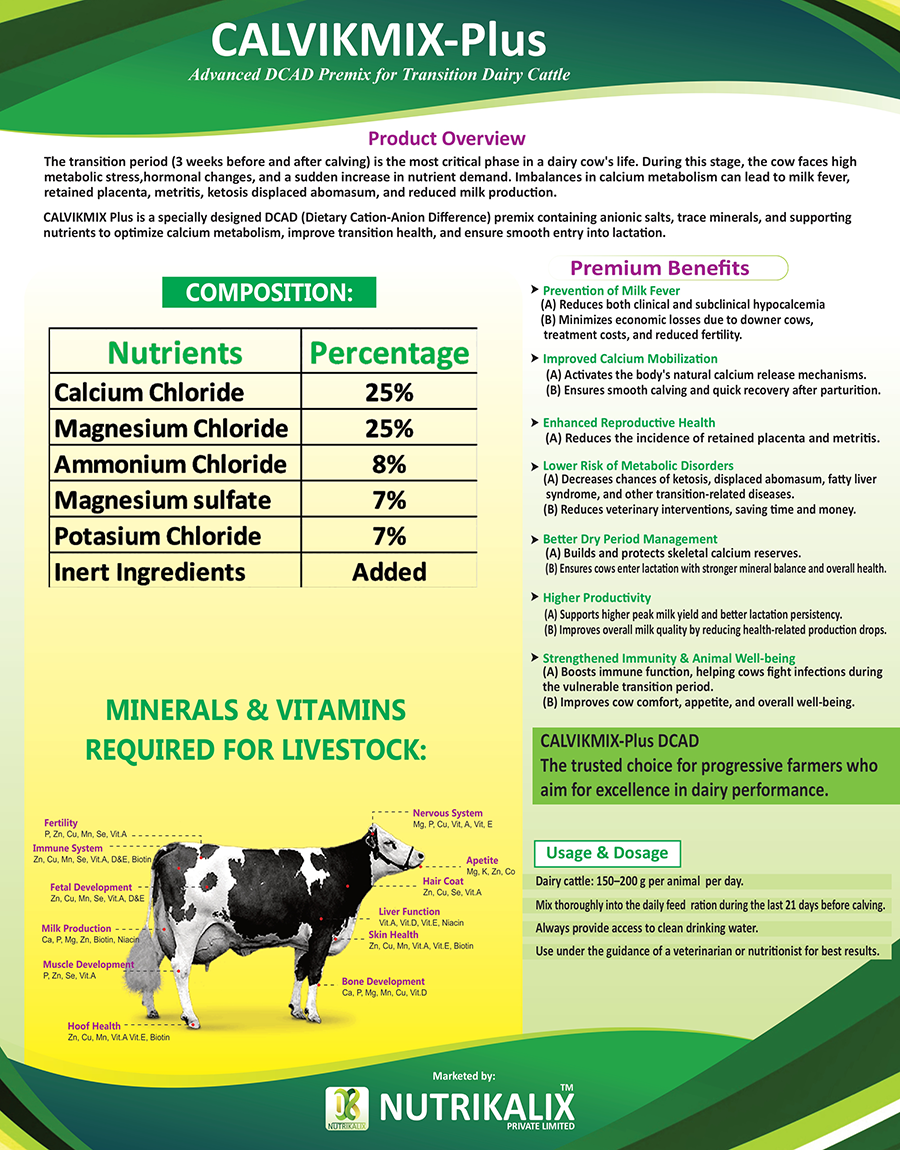
Composition of CALVIKMIX-Plus
CALVIKMIX-Plus contains carefully selected anionic salts and minerals that help to regulate calcium metabolism during the transition period.
- Calcium Chloride – Calcium chloride is an important anionic source that helps improve calcium availability and reduce hypocalcemia risk.
- Magnesium Chloride – Magnesium supports calcium metabolism and proper nerve and muscle function.
- Ammonium Chloride – Ammonium chloride helps create a negative DCAD balance, reducing the chances of milk fever and metabolic disorders.
- Magnesium Sulfate – Magnesium sulfate supports metabolic activity and helps maintain proper mineral balance.
- Potassium Chloride – Potassium chloride supports electrolyte balance and body functions during the stressful transition phase.
- Inert Ingredients – The formulation also includes supportive inert ingredients for product stability and uniform mixing.
Key Benefits of CALVIKMIX-Plus
- Prevents Milk Fever
The advanced DCAD formulation of CALVIKMIX-Plus supports proper calcium metabolism and significantly reduces the risk of milk fever and hypocalcemia.
- Improves Calcium Mobilization
The balanced anionic salts help cows mobilize calcium reserves efficiently before calving.
- Supports Smooth Calving
Proper mineral balance improves muscle contractions and supports easier calving.
- Reduces Metabolic Disorders
Calvimix Plus helps lower the risk of ketosis, retained placenta, displaced abomasum, and other transition-related disorders.
- Improves Feed Intake
Transition cows maintain better appetite and feed intake during the pre- and post-calving period.
- Enhances Reproductive Health
Proper calcium metabolism and mineral balance support uterine health and reproductive recovery after calving.
- Supports Faster Recovery After Calving
The formulation helps cows recover quickly and transition smoothly into lactation.
- Strengthens Immunity
Balanced mineral nutrition supports immune function and helps reduce disease susceptibility during the transition stage.
Importance of Calcium Management in Dairy Cows
Calcium is one of the most important minerals during the transition period. High-producing dairy cows suddenly require large amounts of calcium at calving for colostrum and milk production.
If cows cannot mobilize calcium efficiently, they may develop:
- Milk fever
- Weak muscles
- Reduced feed intake
- Poor uterine contractions
- Retained placenta
- Reduced milk production
CALVIKMIX-Plus helps to prepare cows for this sudden calcium demand before calving.
Role of Magnesium in Transition Nutrition
Magnesium plays a key role in calcium absorption and utilization. Adequate magnesium levels help to:
- Improve calcium metabolism
- Support muscle and nerve functions
- Reduce metabolic disorders
- Improve feed intake
- Enhance transition cow health
Recommended Usage of CALVIKMIX-Plus
- Dairy Cattle: 150–200 grams per animal per day
CALVIKMIX-Plus should be mixed in feed and offered during the last 21 days before calving. Always ensure free access to clean drinking water.
Best Practices for Better Results of CALVIKMIX-Plus
To achieve maximum benefits from CALVIKMIX-Plus:
- Start feeding during the last 3 weeks before calving
- Provide balanced transition ration
- Ensure adequate clean water availability
- Monitor body condition and feed intake regularly
- Maintain proper calving management